

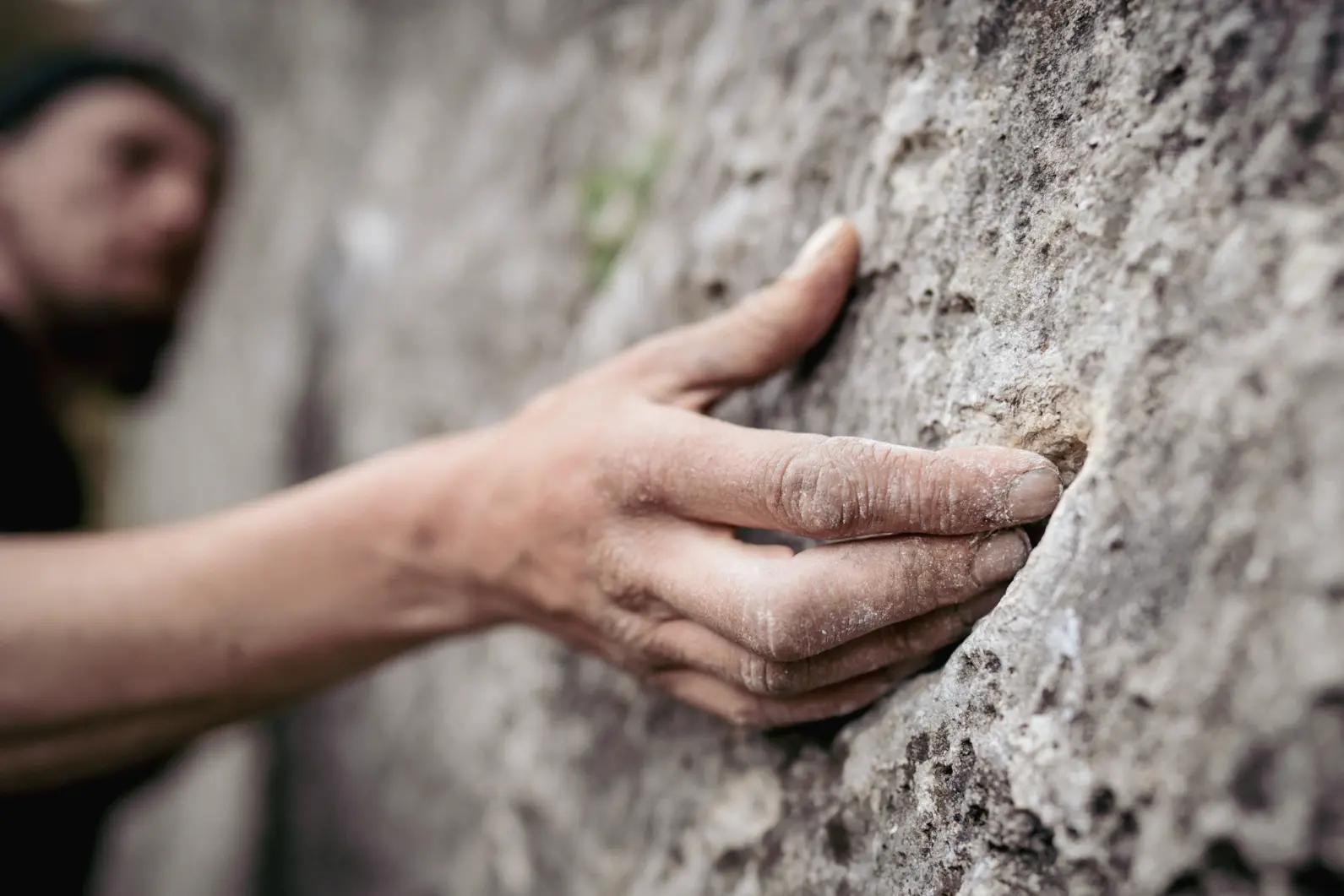
Introduction to Pulleys: Why are They Important for Climbers?
Finger injuries are the most common injuries we see in climbers who visit our clinic in Sheffield and those who see us via video call. It can be really frustrating when you are really motivated to climb, train and improve and then suddenly, or over time, you develop pain in your finger(s) that stops you from enjoying climbing.
One of the most common finger injuries we see is tears and strains to the annular ligaments, AKA pulleys, of the fingers, which are placed under stress when climbing. Whether you’ve heard of them or not, it can sometimes be difficult to work through them and get back to climbing at your best.
Each finger has 5 ligamentous pulleys (A1-A5), with the A2 and A4 being the most commonly injured. Each pulley helps hold the finger tendons close to the bone, allowing us to grip and apply force through the finger in different positions. When the pulley is injured, depending on the severity of the tear, the tendon will ‘bowstring’ away from the bone when loaded, which creates issues for finger function and can often be quite painful. A less severe version of this injury is a strain, which means the pulley has stretched beyond its normal length but hasn’t torn yet. These strains aren’t as impactful or painful and can develop over time, with a less obvious “ouch” moment.
Sometimes, pulley injuries present with an audible “pop” and/or pain whilst crimping, but they can also develop over time. The pulleys are placed under the most amount of strain when your finger joints are ‘more closed’, i.e. the more your PIP joint bends, the more load is placed on the pulleys (crimping). Conversely, the ‘more open’ grips place less strain on your pulleys (drags).
You may have heard these injuries categorised as strains, full/partial tears, or graded as 1, 2, 3 and 4. This reflects the severity of the injury and affects how you might initially manage it. Regardless of how severe the injury is, we usually see most climbers back to their best and often better than they were pre-injury.
It’s Important to have lots of grip options in your climber toolkit. Building your strength and tolerance in multiple grip positions will help you become a more well-rounded climber and reduce your risk of injury.
Causes and Risk Factors
Here are some of the reasons climbers are particularly prone to pulley injuries:
- Overtraining and Load Spikes: One of the most common ways to injure a pulley is to increase finger loading too quickly. Fingers adapt slowly, be patient.
- Poor Finger Conditioning: If your fingers aren’t well adapted to specific intensities or volumes of climbing and training, they are at higher injury risk.
- Fatigue and Poor Recovery: Training too much is one part of the recovery equation, but if you aren’t sleeping or eating well, your body won’t be able to adapt to the training stimulus. This makes your future sessions lower quality and you more at risk of injury due to fatigue.
- Previous Finger Injuries: Not recovering 100% from a previous pulley injury can make you more susceptible to re-injuring that finger because you’ve not regained the load tolerance that is required to tolerate the level of climbing you want to do.
Note: Not addressing other previous finger injuries can also lead to a preferred grip position, which can overload the pulley due to increased crimping. E.g. Not being able to drag properly after a lumbrical injury can mean you end up crimping more and develop a pulley injury.
Symptoms to Watch For
Recognising the signs of a pulley injury early can make a difference in recovery time.
Common symptoms of a pulley injury include:
- Sharp pain in the base of your finger: The pain is often near the A2 pulley, especially during or after crimping.
- Tenderness on palpation: Pressing over the affected pulley (especially A2 or A4) feels painful or bruised.
- Swelling: May appear shortly after injury or persist during flare-ups. Note: This is not always the case; many pulley injuries present with no swelling.
- Reduced movement/stiffness: It’s quite common for the finger to become stiff after the injury, and it is often the first impairment to resolve with rehab.
- Pain when crimping: This injury usually causes pain during crimping positions and tolerates open-handed holds quite well.
- “Popping” sensation/noise: A sudden “pop” during a move can be a sign of a pulley injury (not always).
- Visible bowstringing: In more severe cases, the tendon visibly lifts away from the finger when flexed. Seek medical attention to assess the severity.
How Physiotherapy Can Help
If you experience any of these symptoms, it can be a good idea to consult with a medical professional who understands climbing injuries and the demands of the sport. Getting a clear diagnosis and a plan of how to resolve the injury can save you a lot of disruption to your training/climbing. We all know how frustrating this is!
1. Load Management and Protection
- Immobilisation/protection - depending on the severity of the injury and the individual circumstances of the person, splinting using a pulley ring splint and or taping can be helpful to offload the pulley whilst it’s healing. This is often most helpful for people who have physical jobs that require gripping and lifting.
- Activity modification – It depends on the severity of the injury, but it’s important that climbing isn’t introduced too quickly. Some mild pulley injuries allow people to continue climbing with some modifications, and others require a period of no finger loading before it's appropriate to start climbing again (this doesn’t mean a complete rest from training or activity – it’s important to train around the injury).
2. Reducing Inflammation and Pain
- Maintaining gentle movement and range-of-motion exercises can be helpful in the early stages, when the finger is stiff and painful.
- Avoiding aggravating movements that provoke and sensitise the injury is important for ensuring optimal recovery. E.g. crimping, lifting heavy objects and gripping tasks (pull-ups, rows, etc.)
3. Strengthening and Tissue Reconditioning
- Isometric holds and progressive finger training helps the injured pulley to remodel and regain strength. Without controlled loading, people often end up with prolonged pain and dysfunction in their injured finger. We have seen several cases present to our clinic in Sheffield, and 6-12 months after what sounded like a significant pulley injury, they still can’t load the pulley without pain. If you’re not sure what you should be doing and need some guidance, seek out someone with experience in resolving climbing injuries.
Note: It can be common to develop tenosynovitis in the injured finger when the loading protocol isn’t appropriate. This can become quite a headache because the approaches are usually different, and developing a second injury on top of your existing one is a real nightmare.
4. Education on Grip Types and Technique
- We often educate patients about the different grip types and how they load different structures of the hand. This can be an essential part of learning how to modify your movement whilst injured and to get you back to unrestricted climbing safely.
Note: It is important not only to know the difference between grip positions but also to coordinate your fingers to get into those positions easily under light load. If you struggle to make a strict half crimp on a single finger (pinky excluded), then you should invest some time in learning what it feels like to move your fingers to those positions confidently.
Practical Exercises for Pulley Rehab
1. Tendon Glides and Active Range of Motion
Why: Keeps tendons gliding freely and prevents scar tissue from limiting motion.
How to Do It:
- Flex and extend your fingers through their full range without pain (try to move through an oval-shaped pattern with the fingertips).
- If you want to be more methodical, try to include straight hand, hook fist, full fist, and tabletop.
Perform 2-3 sets of 10 reps daily.
2. Daily Isometric Hangs on a Fingerboard OR Pick up edge.
How to Do It:
- Use a strict half crimp grip on a large edge (20mm or more).
- Load to the fingers at ~50% of the load at which it took to elicit the first symptomatic response and hang for 20-30 seconds.
- Intensity should be ~ 1/10 pain level
Note: we understand this can be difficult to judge for many people (even us!), but often this point of symptom onset refers to the first time you notice the discomfort becoming ‘pain’. A more important note is that you shouldn’t feel significantly worse off a couple of hours after or into the next day. If that’s the case, back off the intensity a little and try again.
- Intensity should be ~ 1/10 pain level
- Perform 4-6 sets with 60-90 seconds rest between loading sets.
Progression: Increase load slowly over weeks by adding small weights or progressing to slightly smaller edges as your symptoms tolerate.
3. Rubber Band Finger Extensions
Why: Can be helpful to strengthen the finger extensors, promote pain-free movement as well and increase blood flow to the area.
How to Do It:
- Place a rubber band or finger extensor trainer just above the fingernails.
- Extend your fingers against resistance with control.
- Perform 2-3 sets of 10-15 reps daily.
Load Management Tips for Pulley Injuries
Managing load is the most critical component of a successful pulley rehab program. Here's what to consider:
- Respect the Healing Timeline: Let it calm down; allow your body to do its thing and begin rebuilding itself. Depending on the severity of the injury, this time frame will vary: some people can enter straight into loading, while others need a few weeks without loading.
- Track Your Sessions: USE A REHAB JOURNAL - Log volume, grip types, pain levels and increase/progression from previous session.
Note: I often recommend this to almost all of my patients as one of the best tools they can use to not only rehab their injuries more effectively but also improve their overall climbing performance. It seems obvious to track what you do to progressively increase rehab/training, but so many of us don’t do it. - Grip selection: This is why it’s important to know your grip types and how you’re holding a hold without looking at your hand. Avoiding crimping early on when climbing is important, whilst you’re loading the injury in a controlled environment (fingerboard/edge).
Note: Most people avoid crimping for too long, which leads to chronic underloading of their injury and long-term frustration and fear of re-injury. - Use Taping Strategically: This is highly situational. I don’t recommend taping for most climbers we see, as it's only effective for a limited number of tries and only when applied well.
- Rebuild Gradually: Begin with easy, low-volume sessions. Follow a structured plan to gradually increase intensity and frequency as symptoms allow. E.g., 2-3 sessions/week with days off between. Start with a short climb (30-45 minutes), and only increase from there if your injury tolerates it well.
When to Seek Professional Help
If you’re unsure about the severity of your injury or symptoms aren’t improving within a few weeks, it’s time to consult with a climbing injury specialist.
If you don’t have access to a climbing specialist in your area, the next best option is an online video consultation. We have provided remote, climbing-specific physiotherapy to thousands of people worldwide.
Book an appointment with our climbing experts: https://whitehouseclinic.connect.tm3app.com/book/sheffield_climbing_clinic
Want more articles like this? https://www.sheffieldclimbingclinic.com/articles
Email us any queries: info@sheffieldclimbingclinic.com
Call us to make a booking: 0114 263 2054
Final Thoughts
Fingers adapt slowly, and trying to force them to become stronger faster often leads to injury. We need to be consistent and patient with our fingers. Climbing and training at a sustainable rate will lead to better performance in the long run and less time off due to injury.
If you know someone who would benefit from this information, please share it with them, as it’s important to have easily accessible information provided by qualified professionals.


